Dry needling: what it is, and what it feels like
It is not acupuncture, the needles are far finer than the ones you are picturing, and you can always say no.
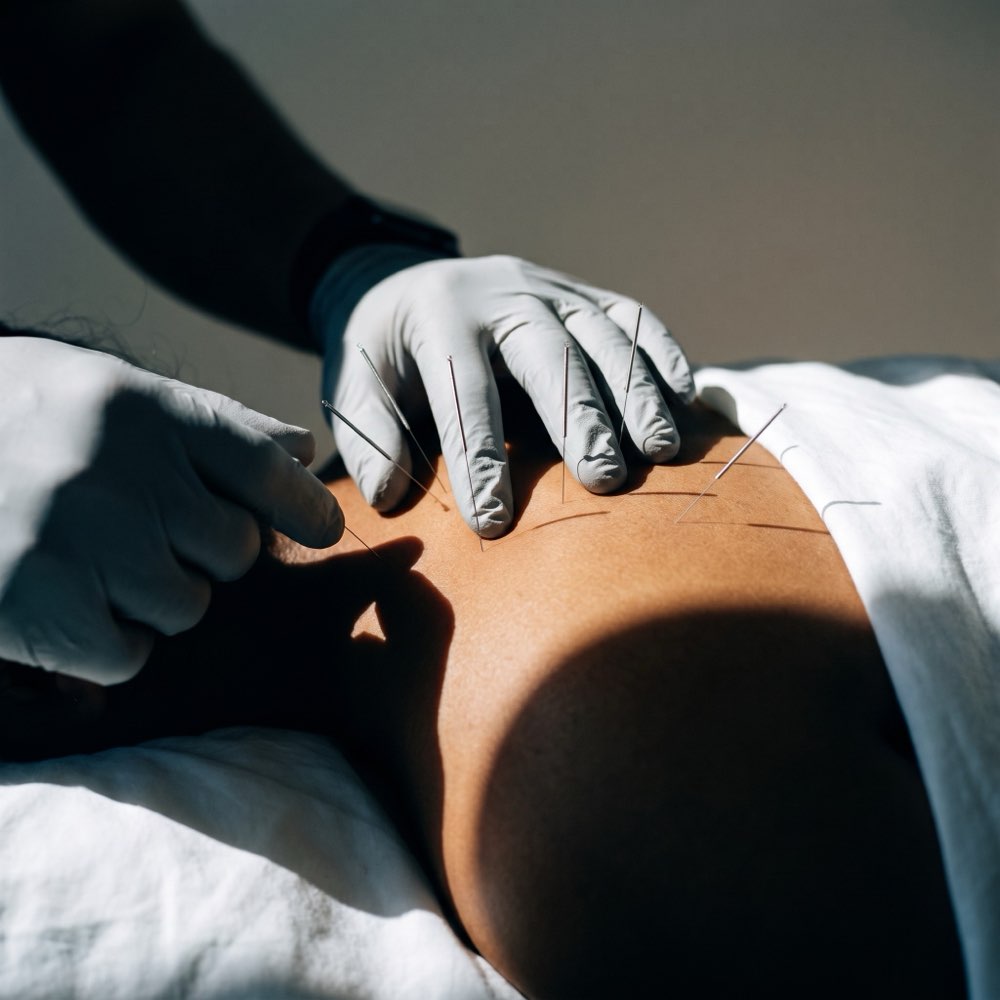
What it actually is
Dry needling uses very fine single-use filiform needles, placed into a tight band of muscle. 'Dry' just means nothing is injected — the needle is the whole treatment.
It comes from Western musculoskeletal anatomy rather than traditional Chinese medicine. The needles are the same physical type used in acupuncture, but the reasoning behind where they go is different: a physiotherapist is targeting a specific muscle that has been identified during the assessment.
What it feels like
Most people do not feel the needle go through the skin. They are roughly the thickness of a human hair, and nothing like a needle used for an injection or a blood test.
What people do feel is a deep, dull ache in the muscle, and sometimes a quick involuntary twitch. The twitch is brief and is generally taken as a sign the right spot was found.
Afterwards the area can feel bruised or heavy for a day or so, similar to the day after a hard workout.
Who it is not for
It is not suitable for everyone. It is avoided or approached with extra care with blood-thinning medication, bleeding disorders, some immune conditions, during pregnancy in certain areas, over an infected or broken area of skin, and with anyone who has a genuine fear of needles.
It is also not compulsory. It is one option among several, and treatment works perfectly well without it. Saying you would rather not is a normal and completely acceptable answer.
Where it fits
Dry needling is a tool for releasing muscle tension so that other things — movement, loading, strengthening — become possible. On its own it is a short-term change.
The lasting part is almost always the exercise that follows it.
General information only, and not a substitute for individual advice. If something is worrying you, see your GP or book an assessment.